
Powered By



Has your doctor recommended a tonsillectomy as a treatment for obstructive sleep apnea (OSA)? It’s a common treatment for OSA in children, though it’s much rarer to see it used in adults.
However, if your obstructive sleep apnea is caused by having large tonsils and more traditional OSA therapy like continuous positive airway pressure (CPAP) doesn’t work for you, then a tonsillectomy might be a good choice.
Here’s what you need to know about tonsils, a tonsillectomy, who might benefit from that surgery when it comes to OSA, and how it can help.
Tonsils are glands that sit on both sides of your throat. You have four types of tonsils, though only one set is visible when you open your mouth. These are called the palatine tonsils.
Tonsils play a role in your immune system. They help protect your body from infections by filtering germs that come in through your nose or your mouth. If your tonsils get too big, though, they can cause problems with breathing, including obstructive sleep apnea.
A tonsillectomy is a surgery that removes your tonsils. It’s usually done under general anesthesia, which means you’ll be asleep for the surgery and won’t remember anything.
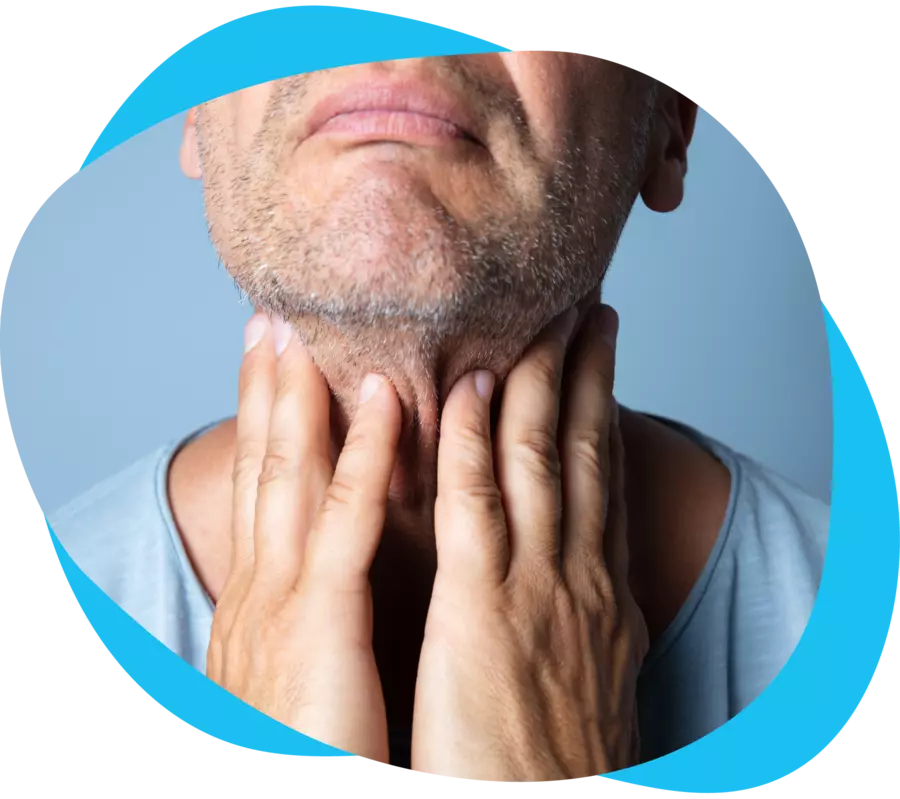 There are several ways to remove your tonsils, and your healthcare provider will choose the one that’s best for your specific situation.
Your doctor may choose to remove your adenoids along with your tonsils. These are other glands in your throat that are also part of your immune system. If they’re large or your doctor suspects they’re causing problems, your surgeon may take both sets of glands out at once.
If your tonsils are too big, they can make your airway narrower and cause breathing problems. This is more common in children, because their upper airways are narrower to begin with.
Removing large tonsils could open up your airway. This would mean that you wouldn’t need additional treatment for OSA.
If your OSA has other causes in addition to large tonsils, like obesity or allergies, a tonsillectomy may improve it even if it doesn’t cure it entirely. You may find, for instance, that you don’t need as much pressure via your CPAP machine or that your oral appliance works better after a tonsillectomy than it did before.
It’s important to remember that tonsillectomy hasn’t been studied as much as other treatments for OSA. While there’s some positive research that may be encouraging, more work needs to be done to determine how often it helps and under what circumstances.
That said, a tonsillectomy did help one member of MySleepApneaTeam, who shared, “I had my tonsils removed in December 2025. My sleep is great now. I was 100 percent blocked before surgery and stopped breathing 78 times during my sleep study.”
A tonsillectomy will only be helpful if you have enlarged tonsils and healthcare professionals believe they’re causing at least some of your problems with OSA.
Your doctor may be able to assess this simply by looking down your throat, but they may also need to use a scope that lets them look down your nose at both the tonsils and adenoids.
Some doctors will only consider a tonsillectomy for adults who have already tried other types of therapy, often CPAP therapy, and they have failed. This can mean that the therapy didn’t work. It can also mean that the person couldn’t tolerate the machine and so the treatment wasn’t improving sleep overall.
In some cases, doctors may try a tonsillectomy if only one of these conditions (large tonsils and treatment failure) is present. Other doctors may want both.
Even when both of these things are true, some people are better candidates for a tonsillectomy than others. People with large tonsils and a small tongue, for instance, may be better candidates and have more OSA improvement than others. Your doctor will assess you and let you know if this surgery might be right for you.
For some people, removing the tonsils actually makes OSA worse, even if the tonsils were enlarged.
In one study, researchers recommended that people be evaluated not only on the size of their tonsils but also on the anatomy and strength of their throat muscles, the size of the base of their tongue, and the size and position of other parts of the mouth and throat.
In some people with OSA, it appears that the tonsils actually act to help keep the airway open, rather than to block it. This means that getting a thorough assessment is important before choosing to have your tonsils removed to help treat obstructive sleep apnea.
Your doctor may need to do additional testing to figure out what role your tonsils are playing and whether removing them would be helpful or harmful.
A tonsillectomy is generally safe, but there are some complications that can occur. Things to look for include:
Note that some level of discomfort is normal after this surgery. Recovering usually takes between two and three weeks. During that time, you might have:
For the first few days, you might even have a fever or experience nausea and vomiting. Your doctor will tell you what to expect and when you need to reach out to them for additional help. Make sure to keep your postsurgical instructions nearby, so you’ll always have your doctor’s number within easy reach.

If you live with OSA, talk to your doctor about the role your tonsils might be playing in it. They should be able to assess you quickly, which may not give you the answers you need but can tell you if you should pursue further testing. They may send you to a specialist called an otolaryngologist, or an ear, nose, and throat (ENT) doctor, for additional assessment.
If you know your tonsils are at least part of the cause of your OSA, talk to your doctor about whether or not you should consider a tonsillectomy. Your healthcare provider will help you weigh the pros and cons so you can make an informed choice.
On MySleepApneaTeam, people share their experiences with obstructive sleep apnea, get advice, and find support from others who understand.
How did enlarged tonsils and sleep apnea go together for you? Let others know in the comments below.
Get updates directly to your inbox.





 Continue with Facebook
Continue with Email
Continue with Facebook
Continue with Email
Continue with Facebook
Continue with Email
Continue with Facebook
Continue with Email
Become a member to get even more





 Join
Join

 Your Privacy Choices

This is a member-feature!
Sign up for free to view article comments.
We'd love to hear from you! Please share your name and email to post and read comments.
You'll also get the latest articles directly to your inbox.