
Powered By



Despite its widespread prevalence, sleep apnea is still underdiagnosed. In fact, about 80 percent of people are unaware they have the condition. But researchers say telemedicine could potentially change that.
Not only does telehealth provide an opportunity for more people to get diagnosed and treated, but it may also make the follow-up process easier. People may even be more likely to consistently wear their continuous positive airway pressure (CPAP) device.
If you’re considering telehealth for sleep apnea, here’s what you need to know, including how home testing works, what’s involved in remote monitoring, and how to know when you need an in-person appointment.
Sign up to view the results!
 Continue with Facebook
Continue with Email
Continue with Facebook
Continue with Email
Telehealth is a growing area of sleep medicine that includes everything from at-home sleep testing to virtual consultations with sleep specialists. It allows physicians to review sleep data and then communicate about it, potentially without ever meeting in person.
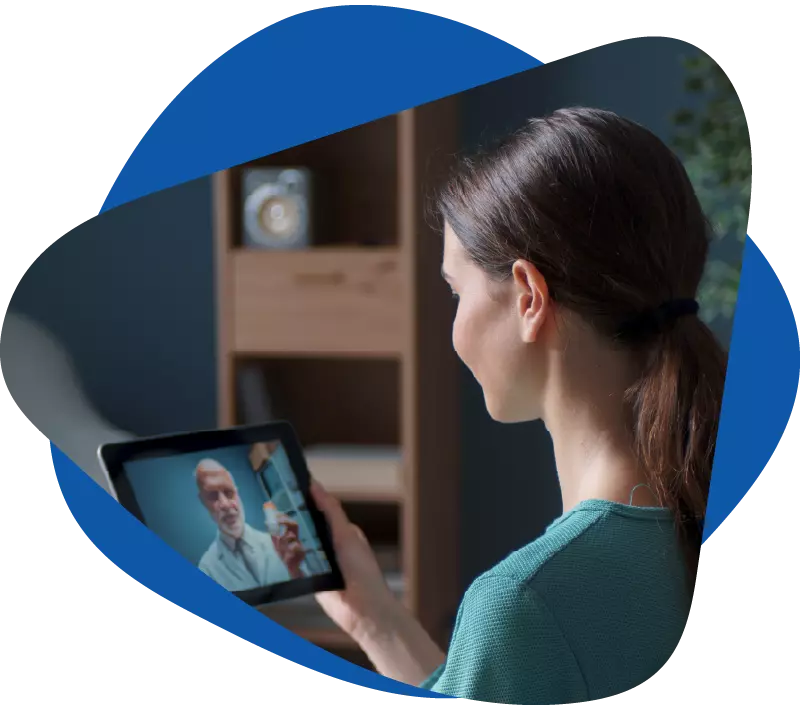 The goals are straightforward. Sleep specialists hope telehealth will improve access to healthcare, reduce wait times for diagnosis and treatment, and encourage people to follow their treatment plans. Telehealth could even reduce how often people miss work.
If your sleep specialist offers a telehealth program, they’ll likely use video consultations for initial evaluations, to review your sleep study results, and to offer CPAP education and setup guidance. Follow-up visits may also be through video consultations.
Overall, most people are happy with this approach to treatment. In fact, one survey found that people were highly satisfied with sleep telemedicine, and all agreed that the quality was on par with in-person visits. Most also said they appreciated the convenience and decreased travel.
In the past, if a sleep clinician suspected that you had obstructive sleep apnea (OSA), they would schedule you for an overnight sleep test, or polysomnograph. These tests are traditionally conducted in a sleep laboratory.
Because a sleep test can take months to schedule and isn’t affordable for everyone, sleep experts, like those with the American Academy of Sleep Medicine, may recommend home sleep apnea testing (HSAT) in certain situations.
Typically, HSAT is recommended for adults at risk for moderate to severe OSA who don’t have other medical issues or complications. It may also be used to see how well your current sleep apnea treatment is working.
In some cases, researchers have found that conducting HSAT on multiple nights may provide a clearer picture of your sleep patterns than a single sleep test conducted in a lab. In fact, having only one night of sleep data could result in a misclassification of the severity of your OSA.
Sleep telemedicine can be used to teach you how to properly use your CPAP device as well as track your treatment’s effectiveness. Additionally, CPAP devices can be used to improve ongoing care. Some devices transmit sleep data and mask leakage information directly to your healthcare provider.
Here’s what you need to know about remote CPAP setup and monitoring options.
Learning how to use and wear your CPAP device can be done remotely. Not only can you learn how to set up your device, but your sleep specialist’s office may also offer troubleshooting options.
One study of 40 people found that those who attended a video conference on how to use a CPAP and prevent leaks were just as knowledgeable as those who received their instruction face-to-face.
Sleep monitoring can include everything from wireless-capable CPAP devices to wearable technologies. These tools are used to collect and analyze your sleep data, which is later reviewed by your doctor to diagnose a sleep disorder or determine how well a treatment is working.
Having information from your CPAP allows your sleep specialist to see how you’re doing and make decisions about your therapy. For instance, they can make adjustments to your CPAP’s pressure and transmit it back to your device without requiring you to make an office visit.
Virtual sleep apnea care offers a number of benefits including convenience, cost savings, and comparable outcomes. But HSAT and sleep telehealth aren't for everyone.

Before you schedule a telehealth visit, it’s important to ensure it’s the right option for you. Start by calling your insurance provider and determining if your plan covers telehealth. This step helps you make sure you won’t have a bunch of out-of-pocket expenses.
You’ll also need to touch base with your sleep specialist’s office to see what type of technology you need. A good internet connection and a device with a working camera and microphone, such as a smartphone, tablet, or computer, are usually what you need.
Some healthcare providers may also require that you access the appointment through your patient portal, an app, or a website link. If that’s the case, make sure to download the required link or app and log on prior to your appointment.
Here are some other ways to prepare for your appointment:
Your first telehealth sleep appointment is also a great time to ask about at-home sleep tests versus a sleep lab test to determine what’s right for you. However, keep in mind that more complex sleep disorders may need testing at a sleep lab.
You may also need an in-person appointment if you have other health conditions or if testing at home would be difficult for you. Your sleep medicine physician can let you know what’s best for you.
 On MySleepApneaTeam, people share their experiences with sleep apnea, get advice, and find support from others who understand.
If you’ve had a home sleep apnea test or used telehealth for your sleep apnea, what was your impression of these services? Let others know in the comments below.
Get updates directly to your inbox.




 Continue with Facebook
Continue with Email
Continue with Facebook
Continue with Email
Continue with Facebook
Continue with Email
Continue with Facebook
Continue with Email
Become a member to get even more





 Join
Join

 Your Privacy Choices

This is a member-feature!
Sign up for free to view article comments.
We'd love to hear from you! Please share your name and email to post and read comments.
You'll also get the latest articles directly to your inbox.