
Powered By



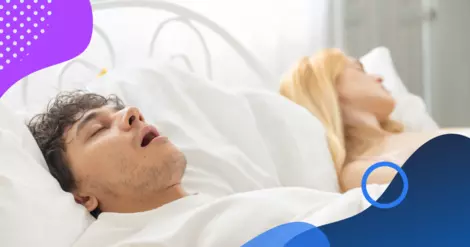
It’s hard to be aware of your own behavior while you’re asleep. That’s a big part of why around 80 percent of people with obstructive sleep apnea (OSA) don’t know they have the sleep disorder. Many people of OSA are diagnosed only after a bed partner notices signs of sleep apnea, such as gasping and snoring, which prompts their partner to get evaluated. As the person who observes OSA symptoms, a bed partner is often impacted by untreated OSA.
Trying to sleep beside a loved one who has untreated OSA can take a toll on both your mental and physical health. Hearing loud snoring and feeling anxiety when your partner stops breathing keep you from getting a restful night’s sleep. If you’re dealing with poor sleep on a regular basis, it can negatively impact your health and well-being.
The good news is that OSA treatment can help provide both your partner and you with the better sleep you crave. Here, we discuss how untreated OSA can affect you and your partner, including how treatment can help improve quality of life for both of you.

OSA is common — it’s estimated to affect 30 million adults in the U.S. alone. If your partner is living with untreated OSA, you may notice common signs, such as loud snoring, brief pauses in breathing, and choking that prompts them to wake up. But why does this happen?
OSA occurs when certain muscles in the throat that support the soft palate (the top tissue in the back of the mouth), sides of the throat, and tongue relax too much during sleep. The collapse of these muscles blocks or narrows the upper airway as you inhale. If a pause in breathing is due to a complete blockage, doctors call it apnea. Hypopnea refers to a partial restriction of breathing.
Untreated OSA can lead to many instances of apnea — sometimes six or more events per hour — that can cause oxygen levels in the blood to drop. If breathing stops, the brain prompts the body to wake up as a defense mechanism so breathing can resume.
Often, people with OSA wake up for such a short amount of time that they can’t recall doing so. However, this constant sleep cycle interference can prevent them from entering into and staying in deeper, more restorative stages of sleep. Their sleep-disordered breathing can then lead to daytime sleepiness, mood swings, headaches, and other common symptoms of sleep apnea.
Having sleep apnea can have negative effects on someone’s overall health. Untreated OSA can lead to an increased risk of heart attack, stroke, obesity, type 2 diabetes, and mental health conditions.
If your partner has OSA, the chronic snoring, gasping for breath, and tossing and turning that you hear can also keep you from getting restful sleep.
Regardless of its cause, lack of sleep can lead to difficulty focusing, mood swings, irritability, and a higher risk of being in a car accident due to daytime drowsiness. Being deprived of quality sleep on a regular basis has also been linked to a higher risk of certain health conditions, such as:
This lack of sleep — coupled with seeing your loved one stop breathing — can be stressful. Your body responds to stress by releasing hormones that temporarily increase your heart rate and raise your blood pressure. Though both usually return to normal, even brief increases in blood pressure can increase the risk of heart attack, stroke, or damage to vital organs like the heart and kidneys.
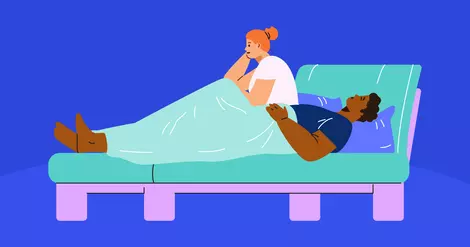
In addition to harming your health, untreated OSA in a bed partner may also negatively affect your relationship. Having a partner with untreated OSA can involve trying to sleep during bouts of loud snoring and other disruptive symptoms. If you’re unable to sleep, it may lead you to distance yourself from your partner in order to get the rest you need.
Some partners may turn to earplugs to block out their partner’s noise. Meanwhile, some turn to sleep aids to help them sleep through the disruptions. Others may opt to sleep in separate rooms or switch up their sleep schedule to get much-needed rest. However, these efforts can sometimes have an unintended side effect: You may start to feel physically and emotionally disconnected from your partner.
Blocking out, or removing yourself from the presence of your partner in order to sleep can put a strain on your relationship. Time that you used to spend before falling asleep being intimate or sharing feelings may be harder to come by, especially if you’ve chosen to sleep separately.
In addition, you may find that during the time you do wish to be intimate with your partner, they’re less interested. Decreased libido (sex drive), one of the lesser-known symptoms of untreated OSA, may also put strain on your relationship.
Although studies have shown that untreated sleep apnea negatively affects partners, many also show that OSA treatment can help improve sleep and quality of life for both partners. This fact, combined with a potential for reduced risk of developing complications, makes it important for people with OSA to pursue effective treatment.
If your partner is diagnosed with OSA, their doctor will recommend a treatment plan based on the severity of their condition and their risk factors for other health conditions. Your partner’s treatment options may include:
One review found that all of these treatment options were linked to improved partner sleep quality. Data also suggested that partners can play a significant role in OSA treatment. For example, people with OSA were more likely to use CPAP machines and oral devices when sharing a bed with a partner. People who were dissatisfied with their relationship before OSA treatment were also more likely to continue therapy longer.
Although dealing with your partner’s untreated OSA may make you feel exhausted and hopeless at times, it’s important to seek help. Your observations can help them to get an accurate diagnosis and find the right treatment. Do your best to support your partner as they get used to their new sleep apnea treatment.
On MySleepApneaTeam, people share their experiences with sleep apnea, get advice, and find support from others who understand.
How has your partner’s sleep apnea affected you? Let others know in the comments below.
Get updates directly to your inbox.



 Continue with Facebook
Continue with Email
Continue with Facebook
Continue with Email
Continue with Facebook
Continue with Email
Continue with Facebook
Continue with Email
Become a member to get even more





 Join
Join

 Your Privacy Choices

This is a member-feature!
Sign up for free to view article comments.
We'd love to hear from you! Please share your name and email to post and read comments.
You'll also get the latest articles directly to your inbox.